
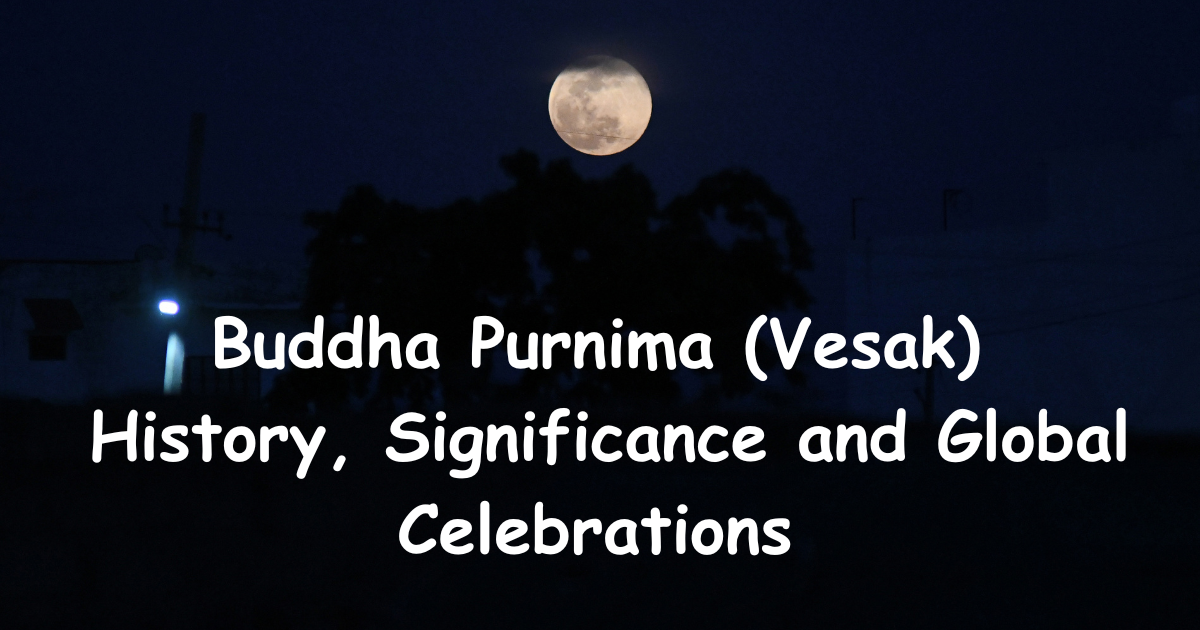
Buddha Purnima, also known as Vesak or Buddha Day, is the most sacred festival in the Buddhist calendar. It is a day that transcends national borders, uniting millions of people in a shared reflection on peace, compassion, and enlightenment. Unlike many other religious festivals that celebrate a single event, Buddha Purnima is unique because it commemorates a “Triple Anniversary”: the birth, the enlightenment (Nirvana), and the passing away (Parinirvana) of Gautama Buddha.
In this exhaustive guide, we explore the profound history of Siddhartha Gautama, the spiritual mechanics of the Eightfold Path, and the vibrant, diverse traditions that define Vesak celebrations from the temples of Tibet to the streets of New York.
1. The Triple Miracle of Vesak
For Buddhists, the timing of Buddha Purnima is not accidental. It falls on the full moon day (Purnima) of the Hindu month of Vaisakha (usually April or May).
The Birth of Siddhartha (563 BCE)
Born in the gardens of Lumbini (modern-day Nepal) as Prince Siddhartha Gautama of the Sakya clan, his birth was prophesied to be that of either a great emperor or a great spiritual leader.
The Enlightenment (528 BCE)
After years of asceticism and searching for the root of human suffering, Siddhartha sat under a Bodhi tree in Bodh Gaya, India. At the age of 35, during the full moon of Vaisakha, he attained Supreme Enlightenment and became the “Buddha” or the “Enlightened One.”
The Parinirvana (483 BCE)
At the age of 80, in Kushinagar, the Buddha passed away. His death is not viewed with sorrow but as the final release from the cycle of rebirth (Samsara), occurring on the same full moon day as his birth and enlightenment.
2. The Core Philosophy: What We Celebrate
Buddha Purnima is a time to recommit to the fundamental teachings of Buddhism.
The Four Noble Truths
- Dukkha: Life involves suffering.
- Samudaya: The origin of suffering is attachment and desire.
- Nirodha: Suffering can be ended by overcoming attachment.
- Magga: The path to the end of suffering is the Noble Eightfold Path.
The Noble Eightfold Path
This is the “Middle Way” that avoids the extremes of self-indulgence and self-mortification. It includes:
- Right Understanding, Right Thought (Wisdom)
- Right Speech, Right Action, Right Livelihood (Ethical Conduct)
- Right Effort, Right Mindfulness, Right Concentration (Mental Discipline)
3. Global Traditions: How Different Nations Celebrate
While the essence of the festival is the same, the cultural expressions of Vesak vary beautifully across the globe.
Sri Lanka: The Festival of Light
In Sri Lanka, Vesak is a massive public festival.
- Vesak Thoranas: Massive, electrically lit pandals (structures) are erected, depicting stories from the Jataka tales (previous lives of the Buddha).
- Dansalas: Free food stalls are set up by locals to offer meals and drinks to pilgrims and travelers, practicing the virtue of Dana (charity).
South Korea: The Lotus Lantern Festival
Known as Yeon Deung Hoe, the streets of Seoul are filled with thousands of colorful lotus-shaped lanterns. The lotus symbolises the heart opening to the light of Gautama Buddha’s teachings.
Thailand, Laos, and Cambodia: Visakha Bucha
In Thailand, devotees gather at temples to listen to sermons and perform the Wian Tian—a candlelight procession where they walk clockwise around the main chapel three times, carrying incense, flowers, and a candle.
Indonesia: Borobudur Ceremony
Thousands of monks and devotees gather at the Borobudur Temple, the largest Buddhist temple in the world. The highlight is the release of thousands of “Puja lanterns” into the night sky, symbolizing enlightenment spreading throughout the universe.
India and Nepal: Pilgrimage to the Roots
In Bodh Gaya and Lumbini, the atmosphere is deeply meditative. Devotees from around the world dress in white, offer flowers and incense to the Bodhi tree, and spend the day in silent meditation or chanting.
4. Symbols of Buddha Purnima
| Symbol | Significance |
| The Dharma Wheel | Represents the Buddha’s teachings and the “turning” of the wheel of truth. |
| The Lotus Flower | Symbolizes purity; though it grows in mud, it blooms beautifully above the water, much like a soul attaining enlightenment amidst a world of suffering. |
| Water | Many devotees pour water over a statue of the baby Buddha, a ritual symbolizing the cleansing of one’s own heart from greed, hatred, and ignorance. |
| White Clothing | Symbolizes purity and the commitment to follow the precepts of the Buddha for the day. |
5. The “Bathing of the Buddha” Ritual
One of the most common traditions during Vesak is the “Bathing of the Buddha.” It commemorates the legend that shortly after Siddhartha was born, dragons (or devas) appeared and gushed water to bathe him.
The Spiritual Meaning: As devotees pour water over the shoulders of a small Buddha statue, they recite a prayer to cleanse their own minds of “inner filth”—the three poisons of greed, anger, and delusion.
6. Acts of Dana (Generosity) and Compassion
Buddha Purnima is not just about prayer; it is about action.
- Vegetarianism: Most Buddhists observe a strict vegetarian diet on this day to honor the first precept: to abstain from taking life.
- Releasing Captive Animals: In some cultures, birds or fish are released from cages or tanks as a symbolic act of liberation.
- Blood Donation: Modern Buddhist communities often organize blood donation drives as a form of “Life Giving” charity.
7. Celebrating Vesak in the West
In Western countries like the United States, United Kingdom, and Australia, Buddha Purnima is gaining recognition as a day of “Mindfulness.”
- Interfaith Dialogues: Temples often invite people of other faiths to learn about meditation.
- Mindfulness Retreats: Many secular organizations use the day to promote mental health and stress reduction through Buddhist breathing techniques.
8. Frequently Asked Questions (FAQs)
Is Buddha Purnima the same as Vesak?
Yes. “Buddha Purnima” is the term commonly used in India, Nepal, and Southeast Asia, while “Vesak” (derived from the Pali word Vesakha) is the internationally recognized name used by the United Nations.
Why do Buddhists wear white on this day?
White is a symbol of mourning for the ego and a symbol of purity. It represents a temporary renunciation of worldly vanity to focus on spiritual practice.
Can non-Buddhists celebrate Buddha Purnima?
Absolutely. The Buddha’s teachings on peace, non-violence (Ahinsa), and mindfulness are universal. Many people visit temples to experience the peace and learn meditation.
What is the “Full Moon” significance?
In ancient India, important events were often tracked by lunar cycles. The Buddha believed the full moon was a time of heightened spiritual energy, making it the perfect time for deep meditation and breakthroughs.
9. Conclusion: The Eternal Light of Wisdom
Buddha Purnima is more than a historical commemoration; it is a living reminder that the potential for enlightenment exists within every human being. In a world often divided by conflict and noise, the message of the Buddha—peace, self-reflection, and boundless compassion—is more relevant today than ever before.
As the lanterns rise over Borobudur and the chants echo through the Himalayas, the message of Vesak remains clear: transform yourself, and you transform the world.
Stay connected with wishz.live for more in-depth explorations of world history, spiritual festivals, and lifestyle guides. If you found this article enlightening, share it with your community to spread the message of peace!