
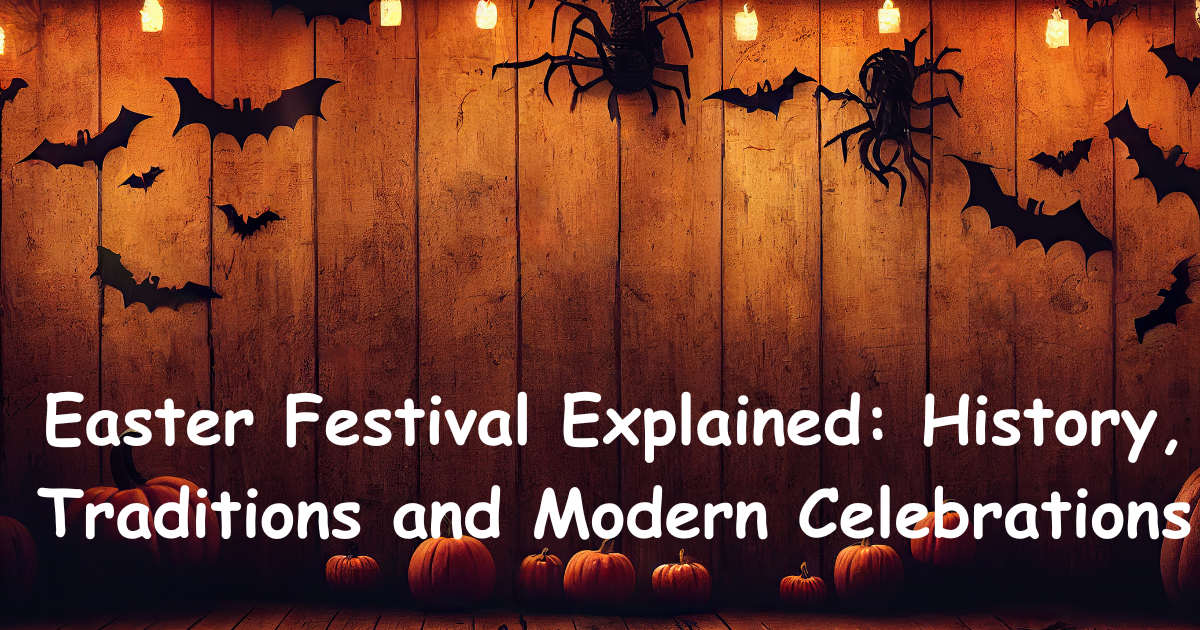
Halloween, celebrated annually on October 31st, is one of the world’s most enigmatic and polarized festivals. To some, it is a night of harmless fun, costumes, and candy; to others, it is a vestige of ancient pagan rituals and a solemn time to remember the dead. From the misty hills of ancient Ireland to the neon-lit streets of modern Tokyo, Halloween has evolved from a survival-based harvest festival into a multi-billion-dollar global phenomenon.
In this exhaustive guide, we explore the 2,000-year history of Halloween, the transition from Samhain to All Hallows’ Eve, the symbolism of the Jack-o’-lantern, and the diverse ways different cultures navigate the “thin veil” between the living and the dead.
1. The Etymology and Meaning of “Halloween”
The word “Halloween” is a linguistic contraction that reveals its religious history.
All Hallows’ Eve
In the 8th century, Pope Gregory III designated November 1st as All Saints’ Day, a time to honor all saints and martyrs. The evening before this holy day was known as All Hallows’ Eve, which eventually shortened to Halloween.
The “Thin Veil” Concept
The underlying meaning of Halloween across almost all cultures is the belief that on this specific night, the boundary (the “veil”) between the physical world and the spirit world becomes thin. This allows spirits—both benevolent and malevolent—to cross over into the realm of the living.
2. Ancient Origins: The Celtic Festival of Samhain
To understand Halloween, one must look back 2,000 years to the ancient Celts, who lived in what is now Ireland, the United Kingdom, and northern France.
The End of Summer
The Celts celebrated their New Year on November 1st. This day marked the end of summer and the harvest and the beginning of the dark, cold winter—a time of year that was often associated with human death.
Samhain (Sow-in)
On the night of October 31st, they celebrated Samhain. It was believed that the ghosts of the dead returned to earth.
- Bonfires: Celts built huge sacred bonfires, where the people gathered to burn crops and animals as sacrifices to the Celtic deities.
- Costumes: During the celebration, the Celts wore costumes, typically consisting of animal heads and skins, to disguise themselves from wandering spirits who might try to possess them.
3. The Roman and Christian Influence
As the Roman Empire conquered most of the Celtic territory by 43 AD, two Roman festivals were combined with the traditional Celtic celebration of Samhain.
- Feralia: A day in late October when the Romans traditionally commemorated the passing of the dead.
- Pomona: A day to honor the Roman goddess of fruit and trees. The symbol of Pomona is the apple, which likely explains the tradition of “bobbing for apples” that is practiced today.
The Christian “Takeover”
By the 9th century, the influence of Christianity had spread into Celtic lands. In 1000 AD, the church made November 2nd All Souls’ Day, a day to honor the dead. It is widely believed today that the church was attempting to replace the Celtic festival of the dead with a related, church-sanctioned holiday.
4. The Journey to America and the Birth of “Trick-or-Treat”
Halloween was not always popular in America. In the rigid Protestant colonies of New England, the celebration was extremely limited. However, as the customs of different European ethnic groups and the American Indians meshed, a distinctly American version of Halloween began to emerge.
The Irish Potato Famine
The celebration of Halloween didn’t truly take off in the United States until the second half of the 19th century, when America was flooded with millions of new immigrants. This included the Irish fleeing the Potato Famine, who helped popularize the celebration nationally.
From “Souling” to “Trick-or-Treating”
The tradition of trick-or-treating dates back to the early All Souls’ Day parades in England.
- Soul Cakes: Poor citizens would beg for food, and families would give them pastries called “soul cakes” in return for their promise to pray for the family’s dead relatives.
- Guising: In Scotland and Ireland, young people would dress up in outfits and accept food or coins in exchange for singing a song, reciting a poem, or performing a “trick.”
5. Iconic Symbols and Their Deep Meanings
| Symbol | Meaning and Origin |
| Jack-o’-lantern | Based on the Irish legend of “Stingy Jack.” Originally carved from turnips, the practice moved to pumpkins in America because they were easier to carve. |
| Black Cats | In the Middle Ages, black cats were thought to be “familiars” of witches. It was believed that witches could transform into black cats to hide in the shadows. |
| Spiders | Symbolize the passage of time and the “weaving” of fate. Finding a spider on Halloween is traditionally seen as the spirit of a loved one watching over you. |
| BATS | Linked to Samhain bonfires; the light attracted insects, which in turn attracted bats. They became a symbol of the night and the supernatural. |
6. Global Traditions: Halloween Around the World
Halloween is not just an American holiday; it has dozens of international “cousins.”
Mexico: Dia de los Muertos (Day of the Dead)
From October 31st to November 2nd, Mexico celebrates the return of deceased loved ones. Unlike the “scary” vibe of Halloween, this is a colorful, joyful celebration.
- Ofrendas: Families build private altars decorated with sugar skulls, marigolds, and the favorite foods of the departed.
China: Teng Chieh (The Lantern Festival)
In China, a Halloween-like celebration involves placing food and water in front of photographs of family members who have departed. Lanterns are lit to light the paths of the spirits as they travel the earth on Halloween night.
Austria: Bread, Water, and a Lamp
In Austria, some people leave bread, water, and a lighted lamp on the table before retiring on Halloween night. It was once believed that these items would welcome the souls back to earth for the night.
Germany: Knives Away
In Germany, it is traditional to hide all the knives in the house on Halloween night. The reason is to prevent the returning spirits from being injured (or from injuring the living) by the sharp blades.
7. The Science of Fear: Why We Love to be Scared
- The Adrenaline Rush: When we enter a “Haunted House,” our brain triggers the “fight or flight” response, releasing adrenaline, endorphins, and dopamine.
- Controlled Environment: Because we know the monsters aren’t real, we can enjoy the physical “high” of fear without the actual danger. This is why horror movies and ghost stories are multi-million dollar industries.
8. The Modern Halloween Economy
Halloween is the second-largest commercial holiday in the United States after Christmas.
- Costumes: Consumers spend billions on costumes for children, adults, and even pets.
- Candy: Roughly one-quarter of all the candy sold annually in the US is purchased for Halloween.
- Agritourism: Pumpkin patches, corn mazes, and “Haunted Hayrides” provide essential revenue for farmers in the autumn months.
9. Frequently Asked Questions (FAQs)
Why do we wear costumes on Halloween?
The tradition comes from the Celts, who wore masks and animal skins to confuse wandering spirits so the spirits wouldn’t recognize them as humans and try to possess them.
What is the legend of Stingy Jack?
Jack was a man who tricked the Devil several times. When he died, God wouldn’t let him into heaven, and the Devil wouldn’t let him into hell. He was sent into the night with only a burning coal to light his way, which he put inside a carved-out turnip.
Is Halloween a religious holiday?
It has religious roots (Samhain and All Hallows’ Eve), but today it is primarily celebrated as a secular, cultural holiday focused on community, creativity, and fun.
10. Conclusion: The Eternal Mystery of the Night
Halloween remains a unique bridge between our ancient past and our modern present. It is a night where we can confront our fears, honor our ancestors, and embrace our creativity through costumes and storytelling. Whether you are carving a pumpkin, walking through a haunted trail, or simply enjoying the crisp autumn air, Halloween reminds us that there is still room for mystery in our world.
As the leaves fall and the nights grow longer, the spirit of Halloween invites us all to step into the shadows and find the magic that waits there.
For more in-depth explorations of world history, festivals, and lifestyle tips, stay tuned to wishz.live. If you found this article “spooktacular,” share it with your friends and family!