
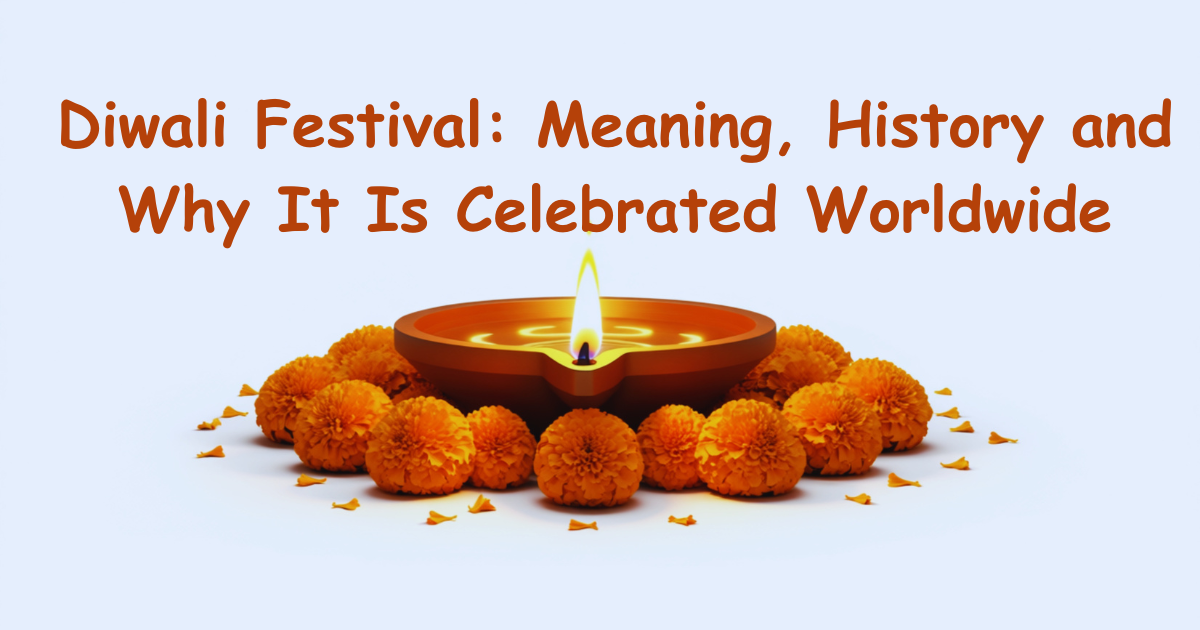
Diwali, or Deepavali, is arguably the most significant and popular festival in the Indian subcontinent and across the global Hindu diaspora. Known as the “Festival of Lights,” it is a five-day celebration that symbolizes the spiritual “victory of light over darkness, good over evil, and knowledge over ignorance.” While its origins are rooted in ancient India, Diwali has transcended religious boundaries to become a global cultural phenomenon, celebrated with equal fervor from the banks of the Ganges to the streets of Leicester and New York.
In this exhaustive guide, we explore the multi-layered history of Diwali, the diverse legends that define it across different Indian states, the symbolic significance of the “Diya,” and the modern-day celebrations that make it a truly international festival.
1. The Etymology and Spiritual Meaning of Diwali
The word “Diwali” is a corruption of the Sanskrit word “Deepavali,” which literally translates to a “Row of Lamps” (Deep = light/lamp, Avali = row).
The Inner Light
Beyond the external display of fireworks and oil lamps, the spiritual meaning of Diwali is deeply introspective. It represents the awakening of the Atman (the soul) to its true nature. In Hindu philosophy, “light” is a metaphor for consciousness and wisdom, while “darkness” represents the ego, prejudice, and ignorance that cloud human judgment.
The New Beginning
For many Indian communities, particularly in the states of Gujarat and Maharashtra, Diwali marks the beginning of the New Year. It is a time for cleaning homes, clearing old debts, and starting new business ledgers (Chopda Pujan), symbolizing a fresh start in both material and spiritual life.
2. The History and Diverse Legends of Diwali
One of the reasons Diwali is so widely celebrated is that it carries different historical and mythological significance for different regions and religions.
The Return of Lord Rama (North India)
The most popular legend associated with Diwali is the return of Lord Rama to Ayodhya after 14 years of exile and his victory over the demon king Ravana. To welcome their King, the people of Ayodhya lit thousands of oil lamps (diyas) to light his path on a dark, moonless night (Amavasya).
The Defeat of Narakasura (South India)
In Southern India, the festival is often called Deepavali. It celebrates the victory of Lord Krishna and his consort Satyabhama over the demon Narakasura, who had imprisoned 16,000 women and terrorized the world. The day is celebrated by waking up before dawn for a traditional oil bath (Ganga Snanam).
Goddess Lakshmi and the Churning of the Ocean
For many, Diwali is dedicated to Goddess Lakshmi, the deity of wealth and prosperity. It is believed that Lakshmi was born during the Samudra Manthan (the churning of the cosmic ocean) on the day of Diwali. She is said to visit the cleanest and most brightly lit homes on this night to bestow her blessings.
Significance in Other Religions
- Sikhism (Bandi Chhor Divas): For Sikhs, the day commemorates the release of the sixth Guru, Guru Hargobind Ji, from Gwalior Fort by the Mughal Emperor Jahangir in 1619.
- Jainism: Jains celebrate Diwali as the day when Lord Mahavira, the last Tirthankara, attained Nirvana (liberation) in 527 BCE.
- Buddhism: Some Buddhists (especially Newar Buddhists) celebrate Diwali as Ashoka Vijayadashami, the day Emperor Ashoka converted to Buddhism and pledged a path of non-violence.
3. The Five Days of Diwali: A Ritualistic Journey
Diwali is not just a single day; it is a five-day sequence of rituals, each with its own specific importance.
| Day | Name | Significance |
| Day 1 | Dhanteras | Dedicated to wealth and health. People buy gold, silver, or new kitchen utensils to welcome prosperity. |
| Day 2 | Choti Diwali | Also known as Naraka Chaturdashi. It involves cleaning the home and creating beautiful Rangoli designs. |
| Day 3 | Diwali (Main Day) | The night of the Lakshmi Puja. Families gather for prayers, feast on sweets, and burst crackers. |
| Day 4 | Govardhan Puja | Commemorates Lord Krishna lifting the Govardhan Hill to protect villagers from torrential rains. |
| Day 5 | Bhai Dooj | Celebrates the bond between brothers and sisters, similar to Raksha Bandhan. |
4. Iconic Symbols of the Festival
- The Diya (Oil Lamp): Traditionally made of clay and filled with ghee or oil, the Diya is the heart of the festival. It represents the destruction of negative traits like anger and greed.
- Rangoli: Colorful patterns made on the floor using rice flour, sand, or flower petals. They are intended to welcome guests and the Goddess Lakshmi into the home.
- Sweets (Mithai): Sharing sweets like Ladoo, Barfi, and Kaju Katli signifies the “sweetness” of relationships and the joy of sharing one’s bounty with others.
5. Global Popularity: Why is Diwali Celebrated Worldwide?
Diwali is now a recognized holiday in several countries beyond India, including Fiji, Guyana, Malaysia, Mauritius, Myanmar, Nepal, Singapore, Sri Lanka, Suriname, and Trinidad and Tobago.
The United Kingdom: Leicester’s Big Lights
The city of Leicester hosts one of the largest Diwali celebrations outside of India. Tens of thousands of people gather on the “Golden Mile” to witness the spectacular light switch-on and fireworks.
The United States: The White House Celebration
Since the early 2000s, the U.S. President has hosted a Diwali celebration at the White House. Major cities like New York and New Jersey have also declared Diwali a school holiday, recognizing the vast influence of the Indian-American community.
Australia: Lighting up the Sydney Opera House
In Australia, the iconic Sydney Opera House is often illuminated in orange or gold to celebrate Diwali, symbolizing the multicultural integration and the contributions of the Indian diaspora to Australian society.
6. The Economic Impact of the Festival of Lights
- Retail Surge: Diwali is the “Black Friday” of India. From automobiles and electronics to jewelry and apparel, consumer spending reaches its peak during this month.
- The Gifting Industry: Corporate gifting and personal gift exchanges drive a multi-billion dollar economy in sweets, dry fruits, and luxury items.
- Tourism: Many travelers visit India during this time to experience the illuminated cities of Varanasi, Jaipur, and Ayodhya.
7. Environmental Consciousness: Towards a Green Diwali
In recent years, a major shift has occurred in how Diwali is celebrated. Due to rising pollution levels, many communities are moving away from loud, smoky firecrackers in favor of “Green Crackers” or entirely cracker-free celebrations focused on lights, music, and community service. This modern evolution shows the festival’s ability to adapt to contemporary global challenges.
8. Frequently Asked Questions (FAQs)
When is Diwali celebrated?
The date is determined by the Hindu lunar calendar. It falls on the darkest night (Amavasya) of the month of Kartika, which typically occurs between mid-October and mid-November.
Why do people burst crackers on Diwali?
Traditionally, the sound of crackers was believed to ward off evil spirits. Today, it is largely a form of public celebration and joy, though many are now choosing eco-friendly alternatives.
What is the “Lakshmi Puja”?
It is the most important ritual of Diwali, performed in the evening. Families pray to Goddess Lakshmi for wealth and Lord Ganesha for the removal of obstacles in the coming year.
Is Diwali the same as the Hindu New Year?
For many communities, especially in Western India, the day after Diwali (Govardhan Puja) marks the official start of the New Year.
9. Conclusion: A Universal Message of Hope
Diwali is much more than a religious event; it is a universal celebration of the human spirit’s resilience. It reminds us that no matter how long the night, the dawn is inevitable. By lighting a single lamp, we can challenge the darkness. As the world celebrates Diwali this year, the message remains the same: let us light the lamp of wisdom within ourselves and share the warmth of compassion with the world.
For more in-depth explorations of global festivals, cultural history, and SEO blogging tips, stay tuned to wishz.online. Share this article with your friends to spread the light of knowledge!